Executive Summary
If you're short on time, here's what you need to know: RF (radiofrequency) microneedling combines tiny needles with heat energy to penetrate deeper into the skin, but the FDA recently issued a safety warning about serious complications. Standard microneedling uses only mechanical punctures to trigger natural healing, while microchanneling employs precise stamping techniques to create shallow channels for serum delivery—both offering gentler alternatives with lower risk profiles.
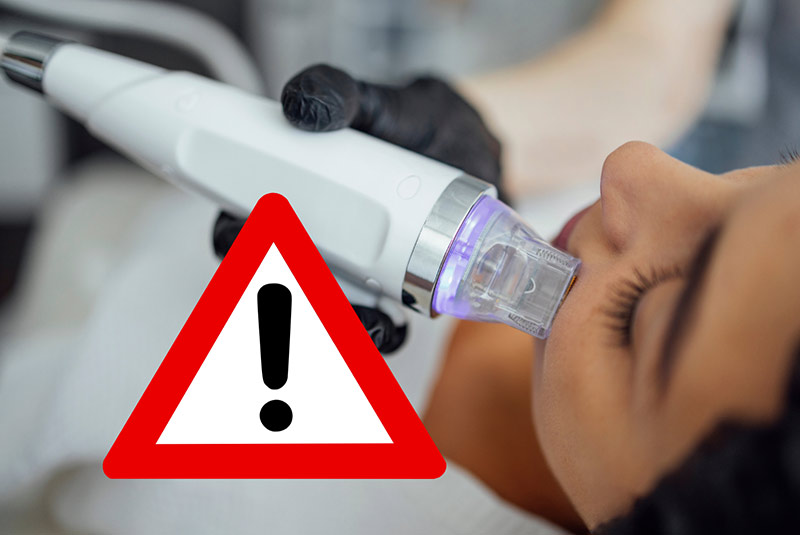
Recent FDA Safety Warning
⚠️ FDA Alert (October 15, 2025): The U.S. Food and Drug Administration issued a safety communication warning consumers and healthcare providers about serious complications reported with radiofrequency microneedling devices, including burns, scarring, fat loss (lipoatrophy), disfigurement, and nerve damage.1
The FDA emphasized that RF microneedling is a medical procedure requiring trained professionals, not a cosmetic treatment suitable for home use.
Adverse events have been linked to device misuse, operator inexperience, and aggressive treatment parameters, particularly in sensitive facial areas,2 with some patients requiring surgical intervention to manage complications.
 Health Canada Update (January 2026): Following the FDA's safety communication, Health Canada acknowledged the potential risks of radiofrequency microneedling in its January 2026 Health Product InfoWatch. While Canadian incident reports remain limited, Health Canada is recommending that healthcare professionals remain vigilant and report any complications associated with RF microneedling devices.12
In Canada, RF microneedling devices are classified as Class III medical devices — the second-highest risk classification — and must be licensed by Health Canada before use. This regulatory framework means Canadian providers are already subject to oversight that doesn't exist in many other markets.
Health Canada has not issued a ban or recall, but the monitoring notice signals that Canadian regulators are actively tracking the same concerns raised by the FDA. For clients considering RF microneedling, this is a meaningful reminder to verify that any provider is using a properly licensed device and has appropriate training.
The Science Behind the Treatments
RF Microneedling: Powerful but Risky
RF microneedling works by inserting insulated needles into the skin and delivering radiofrequency energy, which generates heat to remodel collagen at depths of 1-4mm. This thermal effect denatures proteins, promoting neocollagenesis and elastin production. However, the heat component introduces significant risks.
A 2021 systematic review by Gowda et al. examining adverse effects of microneedling procedures (including RF variants) found that while common side effects like erythema and edema typically resolved within 12 hours to 5 days, the review noted that some patients experienced rarer but more serious outcomes such as persistent grid marks and hyperpigmentation.3
A 2015 study on noninvasive radiofrequency treatments for cosmetic purposes documented that three patients experienced long-lasting erythema and increased skin sensitivity, while seven patients suffered burns requiring medical intervention.4 Importantly, nine of the ten adverse event cases in this study were treated by non-dermatologists, highlighting the importance of proper training.
The thermal component of RF treatments can cause tissue damage at specific temperature thresholds. Research indicates that temperatures reaching 58°C can cause tissue coagulation and necrosis, while epidermal temperatures of 47°C can cause early damage leading to burns or scarring.5
While RF microneedling can be effective for treating deep scars and skin laxity, the elevated risk profile compared to non-heated methods makes it a more aggressive treatment option.
Standard Microneedling: A Reliable Baseline
Standard microneedling, also known as collagen induction therapy, uses devices with fine needles (0.5-2.5mm depth) to create controlled micro-injuries that activate the wound-healing response. This releases growth factors and stimulates fibroblasts to produce collagen and elastin—without added thermal energy.
A 2021 systematic review in Dermatologic Surgery examined 85 articles and concluded that the most common adverse events are transient and expected post-procedure, lasting up to 7 days, including erythema, edema, and pain.6 More persistent serious effects like post-inflammatory hyperpigmentation and tram-track scarring were rare.
The same 2021 review by Gowda et al. analyzing 51 articles covering 1,029 patients found that microneedling, regardless of device type, is a relatively safe procedure with minimal adverse effects.3 A 2021 study on atrophic acne scars noted that no serious adverse effects were reported across all studies after microneedling treatment.7
For acne scars, standard microneedling has demonstrated improvements of up to 60% in clinical trials. A 2025 systematic review confirmed its safety across diverse skin types, with adverse event rates under 5% in most trials for non-cosmetic conditions.8
Microchanneling: The Gentle Evolution
Microchanneling refines standard microneedling by using a stamping mechanism with ultra-fine filaments to create precise, shallow channels (typically under 1mm). This approach optimizes serum delivery while minimizing tissue trauma.
Research on microneedle technology demonstrates significant advantages for transdermal drug delivery. A comprehensive 2018 systematic review found that micron-scale needles dramatically increase skin permeation, especially for macromolecules, by penetrating through the stratum corneum layer.9 Studies show that microchannel systems can significantly enhance serum delivery through the skin, with notably higher compound penetration at depths of 120-270 micrometers compared to topical application alone.10
A 2025 narrative review on microneedling mechanisms noted that channel-based approaches activate physiological repair efficiently, with some studies documenting collagen increases of 200-1000% post-treatment—without the heat-related risks of RF systems.11
The precision stamping technique used in microchanneling systems creates temporary microchannels that enhance absorption of active ingredients while causing minimal disruption to surrounding tissue. This results in near-zero downtime and high safety profiles, making it particularly suitable for sensitive skin and ongoing maintenance treatments. Pairing microchanneling with regular facials can enhance surface hydration and glow between sessions.
Side-by-Side Comparison
| Feature | RF Microneedling | Standard Microneedling | Microchanneling |
|---|---|---|---|
| Mechanism | Needles + RF heat | Mechanical needles | Filament stamping + serums |
| Depth & Intensity | Deep (1-4mm), aggressive | Moderate (0.5-2.5mm) | Shallow (<1mm), precise |
| Key Risks | Burns, scarring, fat loss, nerve damage | Infection, prolonged redness | Minimal (low trauma) |
| Downtime | 3-7 days | 1-3 days | 0-1 day |
| Adverse Event Rate | Higher, with serious complications reported | Low (<5% in most studies) | Very low |
| Suitable for Sensitive Skin? | No | Tolerable | Very |
Key Takeaways
- FDA Warning Is Serious: The October 2025 FDA safety communication represents a significant shift in how RF microneedling is regulated and should be viewed. These are not hypothetical risks—real patients have experienced serious, sometimes permanent complications.
- Provider Expertise Matters: If you do choose RF microneedling, seek care from board-certified dermatologists or plastic surgeons with extensive training on the specific device being used. Nine of ten adverse events in one study occurred with non-dermatologist providers.
- Consider Your Risk Tolerance: Standard microneedling and microchanneling offer proven benefits with significantly lower risk profiles. For many skin concerns, these gentler approaches provide excellent results without the thermal risks.
- Home Devices Are Unsafe: The FDA explicitly warns that RF microneedling devices should never be used at home. The complexity of these treatments requires professional medical oversight.
Final Thoughts
While RF microneedling has its place for those needing intensive results, the recent FDA alerts and studies underscore the value of safer, non-thermal options like standard microneedling and microchanneling. Always consult a qualified professional to ...match the treatment to your skin's unique needs and concerns — whether that's microchanneling for deeper collagen work or gentler facials for everyday rejuvenation. See our facials options for more personalized skincare.
If you're in Windsor and want to explore microchanneling with someone who prioritizes both your safety and results, I'd love to chat. Visit windsorskinwitch.ca/microchanneling for details about how we can help you achieve your skin goals with evidence-based treatments.
Stay safe and glowing! ✨
References & Scientific Literature
- U.S. Food and Drug Administration. Potential Risks with Certain Uses of Radiofrequency (RF) Microneedling – FDA Safety Communication. October 15, 2025.
- Lee K, et al. FDA Alerts Clinicians to Serious Complications with Radiofrequency Microneedling Devices. Dermatology Times. October 16, 2025.
- Gowda A, Healey B, Ezaldein H, Merati M. A Systematic Review Examining the Potential Adverse Effects of Microneedling. J Clin Aesthet Dermatol. 2021;14(1):45-54.
- Chung JY, et al. Adverse Events after Noninvasive Radiofrequency Treatment for Cosmetic Uses. Medical Lasers. 2015;4(1):16-20.
- Bai Y, Ni W. Radiofrequency Improves Facial Fine Lines by Thermal Effect: Damage or Just Stimulation? J Cosmet Dermatol. 2024. doi:10.1111/jocd.16600
- Ramaut L, et al. Safety Profile for Microneedling: A Systematic Review. Dermatol Surg. 2021;47(9):1249-1254.
- Sitohang IBS, Sirait SAP, Suryanegara J. Microneedling in the treatment of atrophic scars: A systematic review of randomised controlled trials. Australas J Dermatol. 2021;62(2):e219-e225.
- García-Oreja S, et al. Microneedling for Non-cosmetic Dermatologic Conditions: A Systematic Review of Efficacy and Safety. Aesthetic Plast Surg. 2025. PMID: 40995236
- Waghule T, et al. Microneedles for transdermal drug delivery: a systematic review. Drug Dev Ind Pharm. 2018;45(2):188-201.
- Sim J, et al. Enhanced Micro-Channeling System via Dissolving Microneedle to Improve Transdermal Serum Delivery for Various Clinical Skincare Treatments. Pharmaceutics. 2022;15(1):75.
- Multiple sources on microneedling mechanisms and collagen production, including systematic reviews in dermatologic literature 2021-2025.
- Health Canada. Potential risks of radiofrequency microneedling – Health Product InfoWatch. January 2026.
Disclaimer: This article is for informational purposes only and should not replace professional medical advice. Always consult with a qualified healthcare provider before undergoing any cosmetic procedure.
Republishing Policy: You are welcome to quote or repost excerpts from this article with proper credit and a direct link back to the original at https://windsorskinwitch.ca/blog/rf-microneedling
Please do not republish the entire article without linking back to the source.
Related Reading
- Microneedling Serums Compared: Growth Factors, PRP, PDRN & Exosomes
- Skin Rejuvenation Treatments Guide: Peels, Needling & More →
- Ultherapy vs Microchanneling: What the Science Actually Says →
- Fall Skin Repair: Why Fall Is a Practical Window for Microneedling →
- Air Quality & Your Skin: How Pollution Damages the Barrier →
- High Frequency & Galvanic Treatments →
- Microneedling with Procell Microchanneling at Hideaway Spa →
- Understanding Scars: Types and How to Treat Them →