Friction & Skin Folds
The most significant factor in skin tag development. Repeated rubbing of skin against skin, clothing, or jewelry in areas like the neck, armpits, groin, and under breasts creates conditions for tag formation.1
Safe, precise treatment for skin tags — if you've been searching for skin tag removal near you, thermolysis at Hideaway Spa delivers permanent results with minimal downtime
Skin tags are among the most common benign skin growths, affecting up to 50-60% of adults at some point in their lives.1 While completely harmless, these small flaps of tissue can become irritated by clothing, jewelry, or shaving, prompting many people to seek treatment options.
At Hideaway Spa, we specialize in professional thermolysis treatments for skin tags using the Skin Classic device — a precise, low-scarring method ideal for treating multiple skin tags safely and effectively. Whether you're dealing with a single bothersome tag or multiple growths, understanding your options helps you make the best decision for your skin.
⭐⭐⭐⭐⭐ Rated 5.0 on Google (30+ Reviews)
Read all reviews on Google →
"Erika did an amazing job taking a skin tag off of my eye. Took only a few seconds to do it after consulting me. The pictures show how huge it was on my eye and then how it looked less than two weeks later."
— Len Ziraldo
"I came to hopefully remove a tag that was just beneath my eye... Erica was able to talk me through all of my anxieties before we began... I would highly recommend going to Erica for anyone considering doing a treatment like this."
— Misty & Me 360
"High quality spa services and products. Everything is clean and hygienic. She cares about giving great service to her clients."
— Laura P.
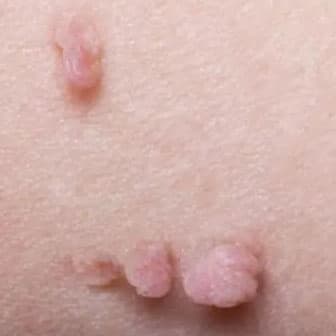
Skin tags, medically known as acrochordons, are small, soft, benign (noncancerous) growths that protrude from the skin on a narrow stalk called a peduncle. They typically appear as flesh-colored or slightly darker bumps ranging from 1-5 millimeters in size, though larger ones occasionally develop.
Skin tags are completely benign with no risk of becoming cancerous. They are not contagious and pose no health threat. However, sudden appearance of multiple skin tags, especially in unusual patterns, may warrant medical evaluation as they can occasionally be associated with underlying metabolic conditions like insulin resistance or diabetes.3
Skin tags develop when clusters of collagen fibers and blood vessels become trapped within thicker areas of skin. This creates excess tissue growth in both the epidermis (outer layer) and dermis (underlying layer), forming the characteristic pedunculated (stalk-like) structure.
The exact biological mechanism isn't fully understood, but research suggests a combination of mechanical friction, hormonal factors, and genetic predisposition contribute to their formation. The areas where skin tags commonly appear — body folds and high-friction zones — support the friction hypothesis.1
While the exact cause remains unclear, several contributing factors have been identified through dermatological research. Understanding these risk factors can help explain why certain individuals develop more skin tags than others.
The most significant factor in skin tag development. Repeated rubbing of skin against skin, clothing, or jewelry in areas like the neck, armpits, groin, and under breasts creates conditions for tag formation.1
Prevalence increases significantly with age, typically beginning in middle adulthood (40+). Family history plays a role — if your parents or siblings have numerous skin tags, you're more likely to develop them as well.
More frequent during pregnancy due to hormonal fluctuations and weight gain that increases skin friction. Many pregnancy-related skin tags resolve spontaneously postpartum, though some persist.4
Strong association with obesity, insulin resistance, type 2 diabetes, high cholesterol (dyslipidemia), metabolic syndrome, and polycystic ovarian syndrome (PCOS). Studies suggest 25-50% of people with multiple skin tags may have underlying insulin resistance.3
Higher BMI correlates with increased skin tag frequency, likely due to greater skin fold development and friction. Weight loss sometimes reduces new tag formation but doesn't eliminate existing ones.
Some research has identified human papillomavirus (HPV) DNA in certain skin tags, though this connection remains debated and is not considered a primary cause. Hormonal imbalances beyond pregnancy may also contribute in some cases.5
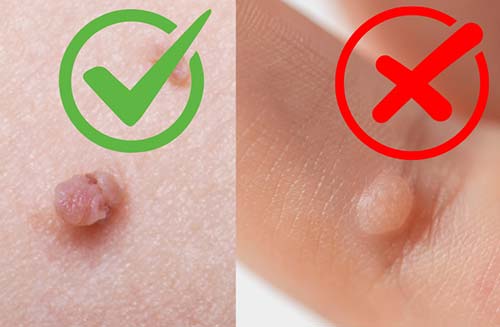
Before attempting ANY treatment method (home or professional), proper identification is essential. What appears to be a skin tag could actually be:
At Hideaway Spa, every growth is examined using a dermatoscope (dermlite) before treatment. This specialized magnification tool allows detailed visualization of skin structures to:
Any lesion exhibiting irregular features, suspicious pigmentation, or clinical uncertainty is referred to a physician or dermatologist before treatment proceeds.
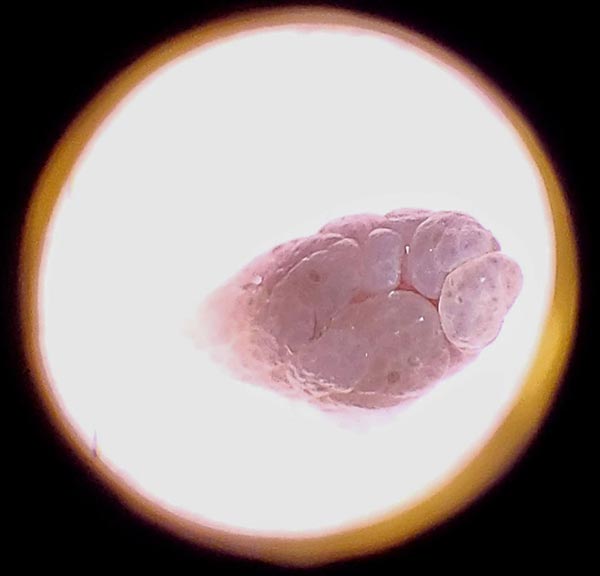
⚠️ Never treat a growth at home without being absolutely certain of what it is. When in doubt, get professional assessment.
Once a growth is confirmed as a benign skin tag, several treatment methods exist ranging from at-home approaches to professional medical treatments. Below is an evidence-based comparison to help you understand the pros, cons, and risks of each option.
| Method | How It Works | Best For | Scarring Risk | Time to Result | Cost (Approx.) |
|---|---|---|---|---|---|
| Tying Off (Ligation) | Dental floss or string tied around base cuts off blood supply; tag dries and falls off | Small, accessible tags with narrow stalks | Low-Moderate | 5-10 days | $0-50 |
| OTC Freezing Kits | Consumer cryotherapy products freeze tissue, causing blister and shedding | Single small tag; convenient home use | Moderate | 10-14 days | $10-30 |
| Professional Cryotherapy | Dermatologist applies liquid nitrogen (-196°C) to freeze and destroy tag tissue | Small to medium tags in accessible areas | Moderate | 10-14 days | $50-200 |
| Surgical Excision | Doctor cuts tag with scissors or scalpel, may use local anesthesia and sutures | Large tags or those requiring pathology | Moderate-High | Immediate (7-10 day healing) | $100-300 |
| Laser Treatment | Laser energy vaporizes tag tissue through targeted heat | Multiple small tags; vascular tags | Moderate | 3-7 days | $150-500+ |
| Thermolysis (Our Method) | Radiofrequency probe dehydrates tag base; body naturally sheds treated tissue | Multiple tags; delicate areas; all skin tones | Very Low | 3-7 days (full healing 21 days) | $50-200 |
Cost estimates reflect typical Windsor/Ontario market rates as of 2025. Individual needs and outcomes vary.
Every treatment method carries potential risks. Understanding these helps you make informed decisions and set realistic expectations.
Proper aftercare significantly reduces all risk factors. Strict sun avoidance and no picking at crusts essential.
All risk information based on dermatological literature and clinical experience. Individual outcomes vary based on skin type, lesion characteristics, technique, and aftercare compliance.
The best treatment depends on several factors:
You may encounter suggestions for home remedies like apple cider vinegar, tea tree oil, or other topical applications. These methods lack scientific evidence of effectiveness and carry risks of skin irritation, chemical burns, or infection without reliably removing the tag.6
While tying off small tags at home is a recognized technique, it requires proper hygiene and technique. For safety and optimal results, professional treatment is recommended for most cases.
Our thermolysis treatment uses the Skin Classic device to deliver precise radiofrequency energy that dehydrates the skin tag at its base. This process allows your body to naturally heal and shed the treated tissue over the following days — a gentle, low-trauma approach that minimizes scarring risk while providing reliable results.
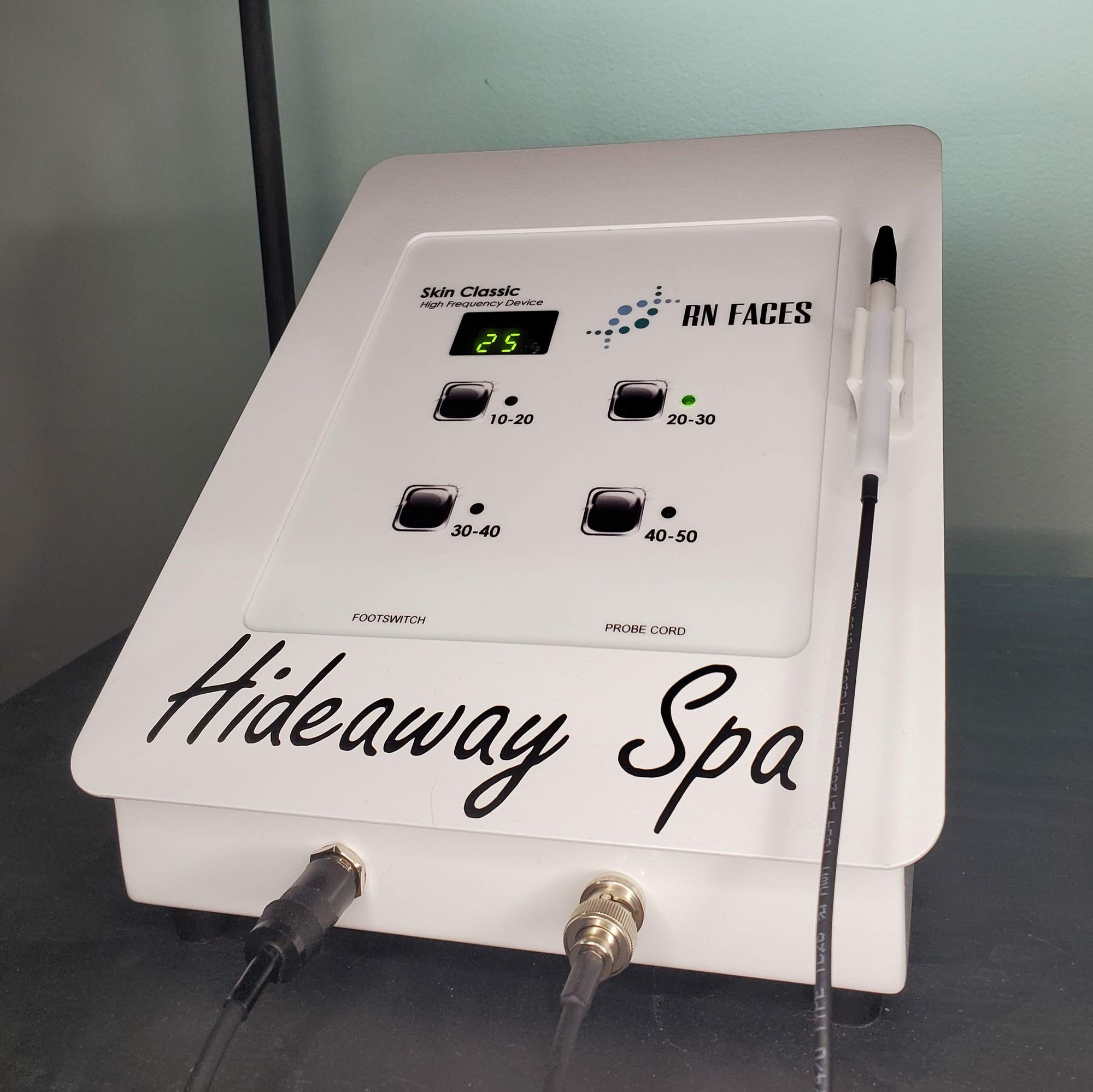
During the procedure, a fine probe (sub-millimeter diameter) briefly contacts the skin tag's base for 2-10 seconds depending on size. The controlled radiofrequency energy rapidly dehydrates the tissue without cutting or freezing. Within 3-7 days, the treated tag naturally falls away as your body completes the healing process.
Thermolysis offers the lowest scarring risk of all treatment methods when properly performed. The precise, controlled energy delivery minimizes damage to surrounding tissue.2
Unlike some lasers that target melanin, radiofrequency energy works safely on all skin types (Fitzpatrick I-VI) with equal effectiveness and minimal pigmentation risk.7
Treatment is quick (a matter of seconds per tag), making it efficient for addressing multiple skin tags in a single session. Most people with 5-30 tags complete treatment in 10-20 minutes total.
Sub-millimeter probe tip allows safe, accurate treatment of tags on eyelids, neck folds, and other sensitive locations where precision is essential.
Most clients experience only a brief stinging or burning sensation during treatment. The discomfort is momentary and no anesthesia is typically needed for small to medium tags.
Most skin tags achieve complete clearance after a single treatment session. Larger or more vascular tags may occasionally require a brief follow-up but it's very rare.
Thermolysis uses radiofrequency energy (typically 13.56-27.12 MHz) to generate heat through ionic agitation within tissue fluids. This resistive heating causes targeted protein denaturation and cellular dehydration without cutting or vaporization.
The technique differs from electrocautery (which uses direct current) and laser ablation (which uses light energy). Each pulse lasts only milliseconds, producing controlled, superficial effects that minimize lateral thermal spread and protect surrounding skin.2
Learn more about thermolysis technology on our blemish correction page.
See exactly how quickly and safely thermolysis treatment is performed on actual skin tags.
Treatment demonstration both a skin tag and a keratosis being treated around an eye
Transparent pricing with no hidden fees. We'll help you choose the most cost-effective option during your consultation.
Unsure how many tags you have or which option is best? Book a single spot online and we'll create a treatment plan during your consultation.
These images document actual client outcomes following thermolysis treatment at Hideaway Spa. Individual results vary based on skin tag size, location, and healing response.
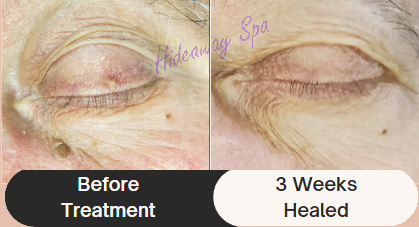
Large skin tag on upper eyelid (and keratosis on the side) — complete clearance after single treatment session
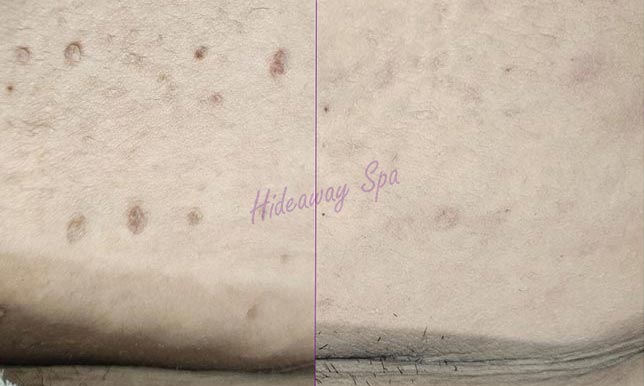
Underarm with a cluster of skin tags, minor pigmentation remains after a single treatment
Results shown represent typical outcomes. Healing time and scarring vary by individual factors including skin type, tag size, and aftercare compliance.
Yes, I can treat your skin tags using thermolysis. Here's how it works: I use the Skin Classic device to deliver precise radiofrequency energy that dehydrates the skin tag at its base. This treatment causes the tissue to dry out and detach from its blood supply.
Your body then naturally completes the removal process. Over 3-7 days following treatment, your body's natural healing mechanisms shed the dehydrated tissue as part of normal wound healing.
This is why thermolysis has such low scarring risk — there's no cutting, no pulling, and no forcible removal. The tag simply falls away on its own as your skin heals underneath.
So technically, I perform the treatment that initiates the process, and your body removes the tag through natural healing. This approach respects your skin's biology and produces the cleanest, most natural-looking results with minimal scarring.
No. Once a skin tag is successfully treated and removed, that specific tag will not regrow. However, if you're prone to skin tags due to friction, genetics, or metabolic factors, new ones may develop in other areas over time. Thermolysis does not prevent new skin tag formation, it addresses existing ones.
Most people describe the sensation as a brief sting or burning that lasts only seconds (while the probe is actively in contact). The discomfort is momentary and well-tolerated by most clients without any anesthesia for small to medium tags. Larger tags may cause slightly more sensation but remain manageable. Pain tolerance varies individually.
The vast majority of skin tags achieve complete clearance after a single treatment session. Occasionally, larger or highly vascular tags may require a brief follow-up treatment if any residual tissue remains after initial healing. Your treatment plan will be discussed during consultation based on your specific tags.
For a single small skin tag with a narrow stalk, carefully tying it off with dental floss can be effective if done with proper hygiene. Over-the-counter freezing products are another option for single tags in accessible locations. However, these methods carry higher risks of infection, incomplete removal, or scarring compared to professional treatment.
For multiple skin tags, delicate locations (eyelids, neck folds), or larger tags, professional treatment offers significantly better outcomes with lower complication risk. Home remedies like apple cider vinegar or tea tree oil lack scientific evidence and are not recommended.6
Skin tags themselves are benign and not dangerous. However, having numerous skin tags (especially with sudden onset) can sometimes indicate underlying metabolic conditions such as insulin resistance, type 2 diabetes, or metabolic syndrome.3
If you develop multiple skin tags suddenly, or if you have other symptoms like unexplained weight changes, increased thirst, or frequent urination, consult your family doctor for metabolic screening. Most people with skin tags have no underlying condition beyond normal age-related changes and friction.
Yes. Thermolysis is safe and effective for skin tags on all body areas including delicate locations like eyelids, neck folds, underarms, groin, and under breasts. The sub-millimeter probe tip allows precise treatment even in sensitive areas where other methods would be risky or impractical. However, be aware that due to reduced bloodflow anything treated below the waist may take longer to heal.
Thermolysis uses radiofrequency electrical energy to dehydrate tissue, while lasers use focused light energy. Key differences include:
Both are effective methods. Your choice depends on individual factors, treatment goals, and practitioner expertise. See our full treatment comparison for detailed analysis.
Most insurance plans consider skin tag removal cosmetic and elective, so it's typically not covered unless the tag is causing significant functional impairment (e.g., vision obstruction, repeated bleeding from friction). Check with your insurance provider for your specific policy details.
At Hideaway Spa, we offer transparent self-pay pricing with no insurance billing complexities. Our pricing structure makes professional treatment accessible and affordable for most budgets.
Avoid swimming pools, hot tubs, saunas, and excessive sweating for 48-72 hours post-treatment to prevent infection and allow initial healing. Light exercise is fine, but activities that cause heavy sweating should be postponed for 2-3 days.
After the crust naturally sheds (typically 5-10 days), you may resume all normal activities. Apply sunscreen to treated areas during outdoor exercise once healed to prevent pigmentation changes.
Your existing skintag will dehydrate and sheds naturally in 3–7 days, revealing fresh skin. Most visible healing (normal color and texture return) occurs within 7–21 days, though in some cases temporary pinkness or minor pigmentation changes may take several months to fully resolve.
We provide a detailed aftercare packet with your service, including these key instructions:
Most clients see excellent cosmetic results with minimal visible signs after 1–2 weeks when following aftercare. If you notice signs of infection (increased redness, pus, swelling) or prolonged changes, contact us right away.
Thermolysis is a superficial, localized treatment with no known systemic effects. It's generally considered safe for minor benign lesions when necessary, including during pregnancy (after the first trimester in some cases) and while breastfeeding, as there's no evidence of risk to the fetus or breast milk. However, due to limited specific studies and potential skin sensitivity changes during pregnancy, we recommend postponing non-essential treatments during active pregnancy as a precaution. For those planning pregnancy, there's no concern — it doesn't affect fertility or conception. Always disclose pregnancy, breastfeeding, or plans during consultation so we can assess and tailor accordingly (e.g., use smoke evacuation if needed). Safer alternatives like gentle skincare can be discussed if deferring.
Absolutely. In fact, thermolysis is particularly efficient for treating multiple skin tags in a single session. Most clients with 5-15 tags complete their treatment within 15-20 minutes. We offer time-block pricing options (10 or 20 minutes) specifically for those addressing multiple tags, which is typically more cost-effective than per-tag pricing.
At Hideaway Spa, we personally use a Skin Classic device. Our main Blemish Correction page has a lot more details about our machine and how it works, but generally the Skin Classic, Lamprobe, ThermoClear, SkinSheer, SIIT Pro, Perfect Touch, Skin Sheek, VascuTouch, Lamskin, and ThermoLo all essentially do the same thing.
Aside from skin tags, we safely and effectively treat a variety of common benign skin concerns using our Skin Classic device. These include cherry angiomas, sebaceous hyperplasia, milia, cholesterol deposits, age spots, and more. We also can treat a large selection of wrinkles, fine lines, scarring, texture or pigmentation issues with our Procell microchanneling device, a less traumatic form of microneedling using medical grade stem cell/peptide serums.
See all the Skin Classic's treatable skin conditions →
Learn about microchanneling for overall skin texture & rejuvenation →
Erika Ziraldo brings over 15 years of experience in advanced skincare and has worked alongside dermatology teams using precision thermolysis, laser and RF devices. She maintains specialized training in the Skin Classic system and takes an evidence-based, personalized approach to skin tag treatment in a private studio setting.
With hundreds of successful skin tag treatments completed, Erika combines technical expertise with a gentle, reassuring approach that helps anxious clients feel comfortable throughout their treatment. Learn more about Erika's background and credentials →
Informed written consent is required before all thermolysis treatments. During your consultation, we'll review the procedure, expected outcomes, potential side effects, and aftercare requirements to ensure you have complete understanding before proceeding.
We request permission for before/after photography for clinical records and potential marketing use; clients may decline public sharing while maintaining private clinical documentation.
Any growth exhibiting irregular borders, color variation, asymmetry, rapid growth, bleeding without trauma, or other clinically suspicious features will be referred for medical evaluation before treatment. Thermolysis is performed exclusively on confirmed benign superficial lesions within cosmetic scope of practice.
Disclaimer: Hideaway Spa provides cosmetic thermolysis for benign skin lesions confirmed through visual assessment. This is not a medical service and does not replace physician evaluation. When medical assessment is indicated, we provide referral recommendations and defer treatment pending clearance. Erika Ziraldo is a certified esthetician, not a medical doctor.